
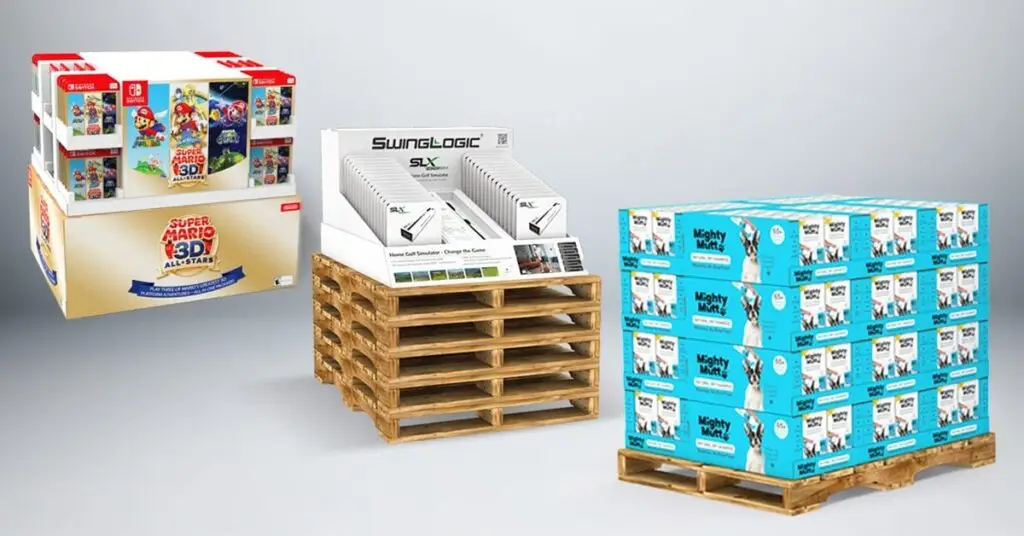
The average Sam’s Club carries between 6,000 and 7,000 items, while Costco stores typically carry approximately 4,000 SKUs. Given the cavernous nature of these warehouse clubs and the sheer amount of products they carry, pallet displays can be an excellent way to ensure your products stand out.
To maximize their impact, retail displays must be eye-catching, engaging, and accessible.
However, the world’s best retail display is pointless if it doesn’t make it onto the store floor. This is why it’s essential to understand each retailer’s requirements for packaging and displays.
This article will provide an overview of Sam’s Club and Costco pallet display and requirements.
What is a Pallet Display?
A pallet display is a point-of-purchase marketing and packaging tool that doubles as both a display piece and a shipping container.
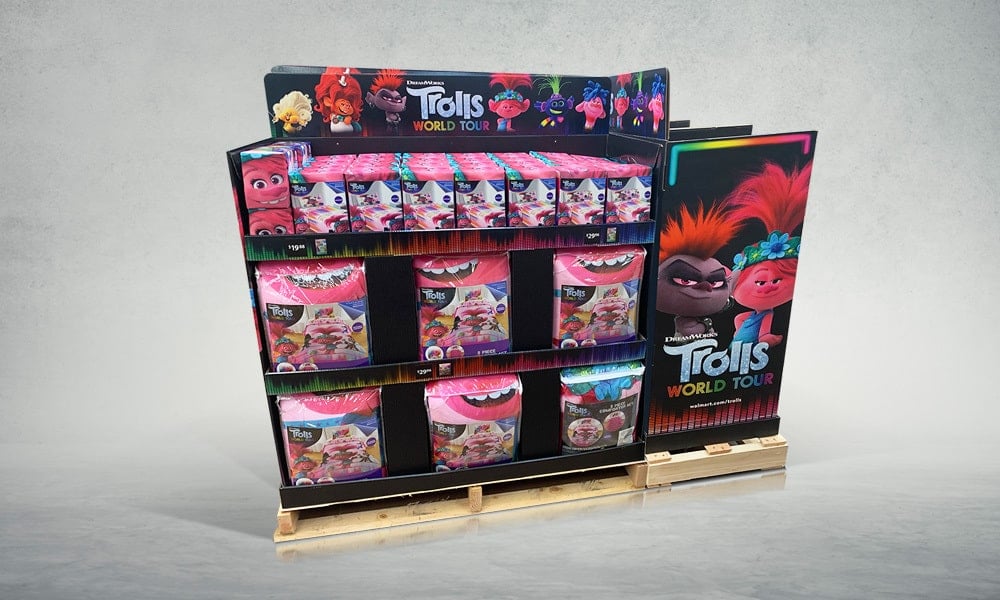
Made of sturdy, lightweight, and cost-effective corrugate, pallet displays can be configured in many designs, including in full, half, and quarter sizes; with or without shelves; and for one or a combination of products. They also allow for on-brand and informative messaging due to digital printing advancements.
Because of their potential to boost foot traffic and get your products in front of customers, pallet displays are especially popular in warehouse club settings.
While pallet displays are useful in many situations, they’re especially suitable for seasonal promotions, sales campaigns, and new product launches.
Different Styles of Pallet Displays
Pallet displays are offered in a wide range of shapes and sizes. They can also be shipped fully assembled or KDF, AKA “knocked down flat.” Club store pallets are requested to be shipped fully assembled, with only the skirt to be put in place in store. Two popular pallet display styles include:
Three-Side-Shoppable (TSS)
With TSS pallets, products can easily be merchandised and shopped from three sides.
Allowing for a flexible customer experience with product interactions supported from all angles, TSS displays often claim coveted endcap status due to their shoppability.
Pallet Skirts
Pallet skirts are a corrugated covering for pallets designed to wrap around a pallet display’s bottom section. They offer many benefits, including reducing inventory risk, managing product inventory, and conveying critical brand recognition and product messaging.
They are an excellent way to add brand messaging, shopper education, and more.
A long-time Costco fixture, butterfly skirts are a particular pallet skirt design. They are a fast and effective way to compel consumers to engage with your products.
Pallet Display Requirements
Club stores each have their own guidelines for pallet displays. For example, most club stores require Full Pallet displays with footprints of 48” x 40”. Understanding the requirements is the best way to ensure compliance. Because if your pallet display isn’t compliant, it will not be accepted by retailers.
Here’s a closer look at the pallet display requirements for two major warehouse clubs: Costco and Sam’s Club.
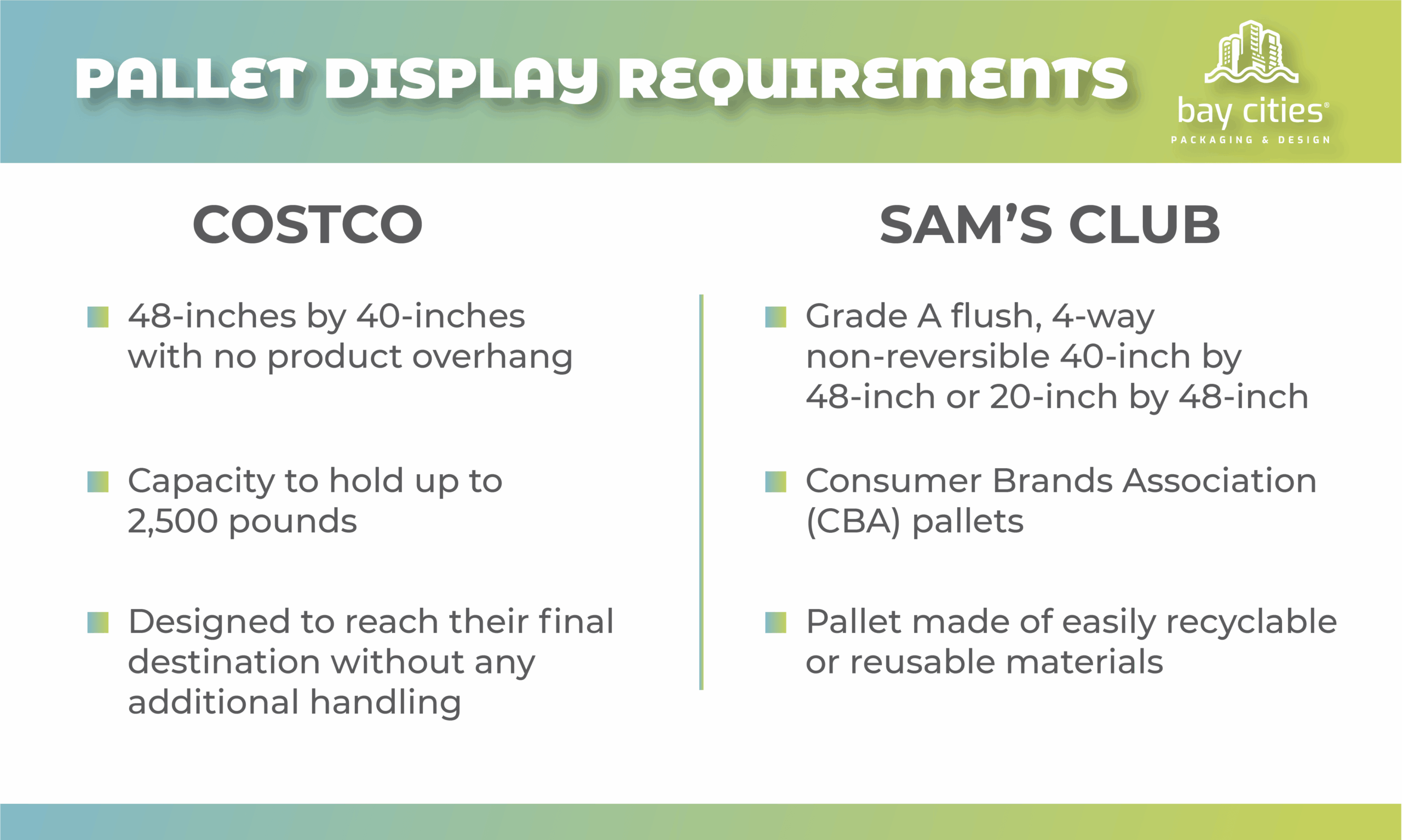
Costco Full Pallet Display Requirements
Costco pallet displays adhere to the 5×5 rule: Does your packaging explain what it is and why it’s necessary — from five feet away and within five seconds? Additionally, Costco expects display pallets to hold products without becoming a hazard within the store.
Other pallet conditions include:
- Full pallet displays must measure 48” x 40” with no product overhang
- Heights must not exceed 58” in store, but be 52” tall or less to double stack in a truck
- Pallets must have the capacity to hold up to 2,500 pounds
- Product must be shoppable from 3 sides, with the 48” side as the main facing
- Pallet skirts are requested to be butterfly style
- iGPS, Pico, and CHEP pallets are allowed
Because Costco mandates a “No Touch” policy for most products, your pallets should be designed to reach their final destination without additional handling. Because this is a strategic endeavor to improve efficiency, Costco conducts random packaging compliance audits. However, butterfly skirts are designed for quick setup in store.
Sam’s Club Full Pallet Display Requirements
Sam’s Club also emphasizes the importance of displays and packaging to make it easy for shoppers to identify the product and its purpose. The display should also be made of easily recyclable or reusable materials.
- Full pallet displays must measure 48” x 40” with no product overhang
- Heights must not exceed 60” in store, but be 52” tall or less to double stack in a truck
- Pallets must have the capacity to hold up to 2,100 pounds
- Product must be shoppable from 3 sides, with the 40” side as the main facing
- Sam’s Club does NOT permit pallet skirts
- iGPS, Pico, and CHEP pallets are allowed
Sam’s Club store associates should be able to easily and quickly set up the display without additional tools. The absence of pallet skirts makes it even quicker to set up the display.
Load and Weight Requirements for Club Store Pallets
Club pallet requirements are built around a simple idea: every load has to hold its shape from the dock to the store floor. Costco and Sam’s Club both use a tiered system for load weight, based on how much the pallet weighs once it’s fully built.
Bottom-Layer Weight and the 750-Pound Threshold
If a pallet configuration weighs under 750 pounds including the pallet itself, the bottom layer must be able to support an additional 1500 pounds without crushing, bending, or tearing the merchandise or packaging. If the pallet exceeds that weight, the bottom-layer requirement increases to 2500 pounds. Either way, individual pallet load weight should not exceed 2500 pounds, including the pallet.
This bottom-layer standard exists because pallets get stacked, clamped, and moved multiple times before they ever reach a shopper. Confirming these numbers early with a packaging engineer can facilitate a smoother approval process, rather than finding out during a rejected shipment.
Pallet Height and Width Limits
Height and footprint both affect whether a display is accepted. Most club store footprints run 48 inches by 40 inches, and going outside that footprint, even by a small margin, is one of the fastest ways to get a pallet rejected. Limits vary slightly by retailer, but the underlying logic is the same: the load has to remain stable and stackable at every allowed dimension.
ISTA Testing and Compliance Standards for Pallet Displays
Meeting a size or weight target is only part of the picture. Suppliers also have to prove the packaging can withstand the actual conditions of transit, storage, and handling, and that’s where third-party testing comes in.
Pre-Shipment Tests and Carrier Requirements
Packaging must be engineered to withstand item-appropriate International Safe Transit Association (ISTA) pre-shipment tests, freight carrier rules, and mandatory government regulations, without failing under load weight. This kind of testing doesn’t guarantee a damage-free shipment, but it substantially reduces the risk of it. The same standard applies whether it’s the pallet display or the product packaging inside it. In practice, that means the supplier is responsible for building and testing packaging that can withstand long-haul transit, repeated forklift and clamp handling, humidity, and at least four weeks of storage time without damage.
Why Compliance Protects the Supply Chain
Compliance isn’t a formality tacked onto the end of the design process. It’s what lets a pallet move through distribution centers without being pulled aside for rework. These same standards govern transportation handling across the entire supply chain process, not just the final mile into the store. A supplier who incorporates ISTA testing early, rather than after a rejected shipment, tends to get approved faster and with fewer costly redesigns.
Pallet Condition, Construction, and Board Grade Requirements
Pallets themselves have to meet construction and condition standards before the display built on top of them even matters.
What Suppliers Need to Know About Good Condition
A pallet in good condition has no broken or missing boards, no wide cracks, and no protruding nails or splinters. Stringers, the boards that run between the top and bottom deck, must be free of visible damage. Suppliers should utilize board grades that match the product’s actual load weight, since minimum board grade requirements exist to make sure the structure can carry its load without failing in transit.
Wooden Block Pallets and Reuse
Block pallets are generally required once a load crosses that same weight line, and many club retailers accept a mix of block, GMA, and other approved pallet types. Where fasteners are used, such as on metal frame rack displays, penetration into the block’s interior matters for holding strength. Reusable, block-based pallet construction is a growing trend across club retailers looking to cut long-term costs, since a pallet built to be used again tends to reduce overall packaging spend.
Category-Specific Costco Display Guidelines
Not every product fits the standard full-pallet footprint, and Costco publishes specific guidelines for category-based needs that require a different structure entirely. Reviewing the retailer’s pallet guidelines early, before production starts, avoids a redesign later in the process.
When Standard Pallet Rules Don’t Apply
Categories like apparel, books, and certain service departments may ship in a fully enclosed master case instead of a standard pallet display, since they aren’t merchandised on a pallet or shelf. Items with directional stacking requirements, such as TVs, need cartons oriented and reinforced specifically to support that orientation. Bulk quantity categories, meanwhile, often call for a bulk bin or U-shaped access panel instead of a conventional shoppable pallet, and die-cut openings in that panel help preserve product visibility.
Handling Bulky Categories on the Store Floor
Vertically unstable products, like brooms, mops, or framed art, need dividers, corner supports, or a wood crate to keep the load from tipping once it’s on the store floor. These builds should also minimize secondary packaging where possible, since extra material adds handling time without adding protection or visibility. The goal across every category is the same one that applies to a standard pallet: optimize the structure so it protects the product, meets retailer guidelines, and still looks like an impactful, on-brand display once it’s unwrapped.
What “No-Touch” and Retail-Ready Packaging Mean in a Club Store
In a club store environment, “no-touch” means the display is built to move from distribution to the sales floor with as little handling as possible. The packaging and pallet display should arrive ready for merchandising, with a clean presentation, strong branding, and a structure that works within the retailer’s operating process.
Why No-Touch Matters
For club retailers, speed and consistency are the primary goals. A display that needs extra unpacking, rebuilding, or cleanup takes more time, more labor, and more floor space. Retail-ready design reduces friction for brands, support faster execution, and creates a better opportunity to sell at the moment of display.
What Retail-Ready Looks Like
A retail-ready unit should be easy to place, easy to shop, and visually clear from the top to every shopper-facing side. In practical terms, that means the structure and graphics need to work together with the pallet footprint, all need to work together so the display can go directly to the floor without extra adjustment.
Common Costco Pallet and Sam’s Club Display Mistakes to Avoid
Club programs create a big opportunity, but they also come with a high bar. Small errors in structure, graphics, or execution can slow the approval process or weaken the display once it reaches the floor.
Mistake 1: Designing for Compliance Only
Meeting a size or weight standard is important, but it is not enough. A pallet display also has to sell, hold up in transit, and support the brand on the shelf. When the design only checks the technical boxes, the commercial value can fall short.
Mistake 2: Weak Structure or Poor Fit
If the display lacks support, the top load can shift, the product can lean, or the unit can lose its visual impact. Club displays need to protect product, hold their form, and use space efficiently across the full pallet.
Mistake 3: Graphics That Do Not Communicate Fast Enough
In a fast-moving warehouse environment, shoppers should understand the product quickly. If messaging is unclear, buried, or visible from only one angle, the display can miss a chance to sell.
How to Design Graphics for 360° Shoppability and Faster Product Understanding
In club retail, shoppers often approach displays from multiple directions. That means graphics should work across the full unit, not just the front.
Use All Sides to Support the Message
A strong pallet display should communicate the product story from every shopper-facing angle. Clear headlines, product visuals, and concise selling points help shoppers understand what the item is, why it matters, and why they should sell themselves on it quickly.
Keep the Message Clear and Focused
The best club-store graphics do not overload the display. They focus on a few strong points that help shoppers identify the product fast. In this setting, clarity matters more than decoration. The goal is to support quick understanding and drive sales without creating visual clutter.
Why Structural Strength Testing Matters for Club Store Displays
A club display needs to do more than look good in a design review. It has to perform through shipping, handling, and floor placement.
Testing Helps Protect the Process
Structural testing helps validate that the display can meet retailer standard expectations and support the real-world process from manufacturing through floor placement. This includes top-load performance, stability, and overall durability.
Strength Supports Better Execution
When a pallet display is engineered and tested correctly, it is more likely to hold its shape, keep product aligned, and maintain its presentation through setup. That helps the retailer’s team execute faster and gives the brand a more reliable path to market.
How Sustainability and Minimal-Waste Expectations Shape Club Decisions
Sustainability is becoming a more visible part of club retail decision-making. Brands are being asked to think about materials, waste reduction, and how the display performs after the product sells through.
Design for Minimal Waste
A smart display uses minimal material without sacrificing strength or shelf impact. Reducing unnecessary components can save space, simplify the recycling stream, and support a more efficient program overall.
Balance Sustainability With Performance
The goal is not just to remove material. It is to build a display that still performs to the retailer’s standard, supports logistics, and helps the brand sell effectively in-store. Strong design balances sustainability, strength, and merchandising value.
Verify Requirements Directly Because Standards Can Change
Club requirements are not static. Specifications, review expectations, and operational priorities can shift over time, which is why brands should confirm important details directly with the retailer and align early with their packaging partner.
Why Verification Matters
A display that worked for one program or one season may not match the next review cycle. Retailer expectations can evolve around dimensions, materials, graphics, or sustainability. Verifying requirements directly reduces risk and keeps the approval process on track.
Build Flexibility Into the Program
The strongest programs are built with enough flexibility to adapt when standards shift. That means keeping documentation current, validating assumptions early, and using a partner who can navigate changes without slowing down execution.
FAQs
What is no-touch packaging in a club store?
No-touch packaging is a format designed to move directly from distribution to the sales floor with little to no rework by the retailer. In a club store, that usually means the pallet display arrives ready for merchandising, with structure and graphics already built for fast setup.
Why do Costco pallet displays need strong structural testing?
A Costco pallet display has to hold product securely through shipping, handling, and floor placement. Testing helps confirm the unit meets retailer standard expectations for stability, top-load performance, and overall execution.
Why does 360-degree design matter for club displays?
Shoppers in club environments often approach from multiple directions, so displays need to communicate from more than one side. A 360-degree approach lets shoppers understand the product faster and gives the brand more chances to sell.
Should brands verify Costco or Sam’s Club requirements directly?
Yes. Requirements can change, so brands should confirm key specifications directly with the retailer before final production. That step helps protect the approval process and reduces the risk of costly revisions.
Design a Show-Stopping Display with Bay Cities
Well-executed displays offer many benefits, including helping people identify our products, ease of use, and sustainability. Working with a partner who understands the ins and outs of club store compliance guidelines is essential.
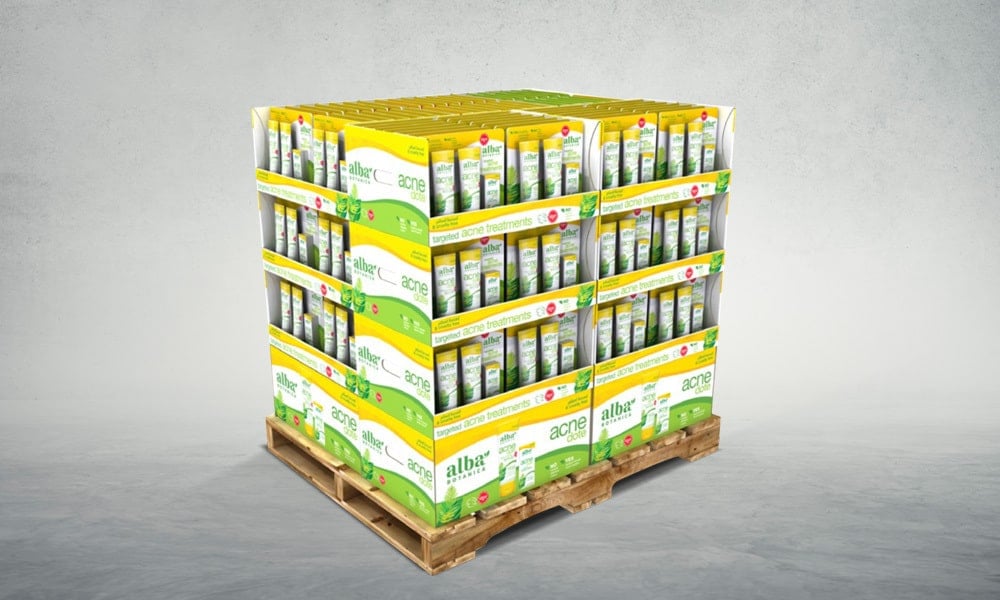
At Bay Cities, we have extensive experience designing and manufacturing custom pallet and POP displays. In addition to creating a display you love, we can help you accelerate and streamline your pallet display journey from the production floor to the storefront with creative ideas and inspiration.
Interested in learning more about pallet displays and why they might be a good fit for your marketing and packaging efforts? Request your free quote to get started.
Disclaimer: Requirements are accurate at the time of publication. However, pallet requirements are subject to change. Please contact Bay Cities or Retailer to confirm current requirements.
{{cta(‘9476caed-b3c2-4264-9ce8-c9ea98e622d1’)}}