

If you’re not familiar with the packaging industry, it’s easy to assume that all corrugated boxes are the same. However, this couldn’t be further from the truth. In packaging, corrugated sheets are linerboard or fiberboard. And there are many types of linerboard suitable for various packaging, display, and shipping needs!
More precisely, containerboard is the paper-based material used to manufacture corrugated board. It includes linerboard and corrugating medium, which work together to create the finished structure used for a box, display, or other corrugated packaging application.
Here’s a closer look at what makes linerboard different, along with a roundup of the different types of linerboard.
What Is Containerboard and Corrugated Linerboard?
You probably interact with linerboard or fiberboard every day. Linerboard includes either one or two outer flat sheets of linerboard and an inner piece of “corrugated” paper with waves, ridges, grooves, channels, furrows, or an alternate structure. Each of these individual waves is known as a flute.
In technical terms, linerboard is the flat paper used on the outer surfaces of the board, while corrugating medium is the paper formed into the fluted inner layer. Together, these components create corrugated board.
When viewed from the side, linerboard is not flat like other types of linerboard. Instead, you see the texture of these flutes. Because of this internal structure, linerboard is a strong yet lightweight material.
During production, a corrugator combines the linerboard and medium into a continuous sheet before it is cut, printed, folded, or converted for a specific packaging application.

The Benefits of Corrugated Packaging and Linerboard
Corrugated linerboard offers more strength and cushioning than bare cardboard. Its benefits include:
- The ability to support a significant amount of weight
- Additional protection during transportation
- The ability to resist pressure when applied from different angles
These properties make corrugated board suitable for applications ranging from lightweight retail packaging to protective shipping cases and structural displays.
Types of Corrugated Linerboard for Boxes and Displays
All corrugated linerboard and fiberboard aren’t created equal. Depending on your shipping, product packaging, or display needs, one type of corrugated linerboard may be more appropriate than another.
The right containerboard construction depends on the product weight, required cushioning, printing needs, stacking conditions, and final application.
Here are examples of some common types of corrugated linerboard:
Single Wall Board. The most prevalent style of corrugated linerboard, single wall board, AKA “double face,” features two linerboards sandwiching the corrugated medium. It is often used for shipping boxes.
This construction is commonly selected for a standard box or retail packaging application that requires a balance of protection, printability, and material efficiency.
Double Wall. This type of corrugated fiberboard, which features three linerboard sheets with two interior layers of fluting, is very resistant to breaking when stacked. It is often used for heavier objects and larger industrial containers.
Double-wall construction may be better suited to a demanding corrugated packaging application where additional stacking strength and product protection are required.

Different types of linerboard are also available in several flute types. Each of these varies across factors, including thinness, strength, and durability. They include:
- C-flute: At 5/32nds of an inch thick and 39 flutes per foot, this common type of corrugated flute is adequate for most shipping needs and has a good surface for printing.
- B-flute: At 1/8 of an inch thick and 47 flutes per foot, this type of corrugated flute is a popular pick for small boxes and products. While strong, it folds and prints well — making it an ideal choice for fiberboard cutouts for POP displays. These properties make it one of the most commonly used flute types.
- E-flute: This linerboard is ideal for folding and printing at 1/16 of an inch thick and 90 flutes per foot. These properties make it a common and reliable choice for the primary packaging for everything — from cosmetics to pizza boxes.
- F-flute: At just 1/16 of an inch thick and 125 flutes per foot, this type of corrugated fiberboard is micro-thin, suitable for printing, and uses less fiber. This flute type is not as common for packaging or displays, but it is often used for items like fast-food clamshells.
Generally speaking, larger flute profiles offer better cushioning and vertical compression strength, while smaller flute profiles offer more flexible structural and graphics performance.
Choosing the right flute and containerboard combination helps ensure that the finished box performs as intended during manufacturing, shipping, stocking, and display.
FAQs
What Is the Difference Between Containerboard and Corrugated Board?
Containerboard is the paper material used to manufacture corrugated board. It includes linerboard and corrugating medium. Corrugated board is the finished structure created when one or more sheets of fluted medium are attached to flat linerboard facings.
What Is the Difference Between Linerboard and Corrugating Medium?
Linerboard is the flat paper typically used on the inner and outer surfaces of the board. Corrugating medium is the paper formed into arches, or flutes, between the linerboard sheets. Together, they provide the strength, cushioning, and stability needed for a corrugated packaging application.
Is Corrugated Board the Same as Cardboard?
Not exactly. Cardboard is a broad term for heavier paper-based materials, while corrugated board contains at least one fluted layer between flat linerboard sheets. This layered construction generally makes a corrugated box stronger and better suited for shipping, displays, and protective packaging.
How Is Corrugated Board Made?
Corrugated board is produced on a machine called a corrugator. The corrugating medium is shaped into flutes and bonded to one or more sheets of linerboard. The completed sheet can then be cut, printed, folded, and converted into the box or display required for a specific application.
Find the Right Packaging & Displays at Bay Cities
It’s no surprise that linerboard is a go-to material for retail display and packaging products. There’s a lot to consider regarding corrugated cardboard options for your brand’s packaging or displays. At Bay Cities Packaging and Design, we’ll review your needs and pull from our extensive experience to advise your corrugated linerboard options from our selection of corrugate.
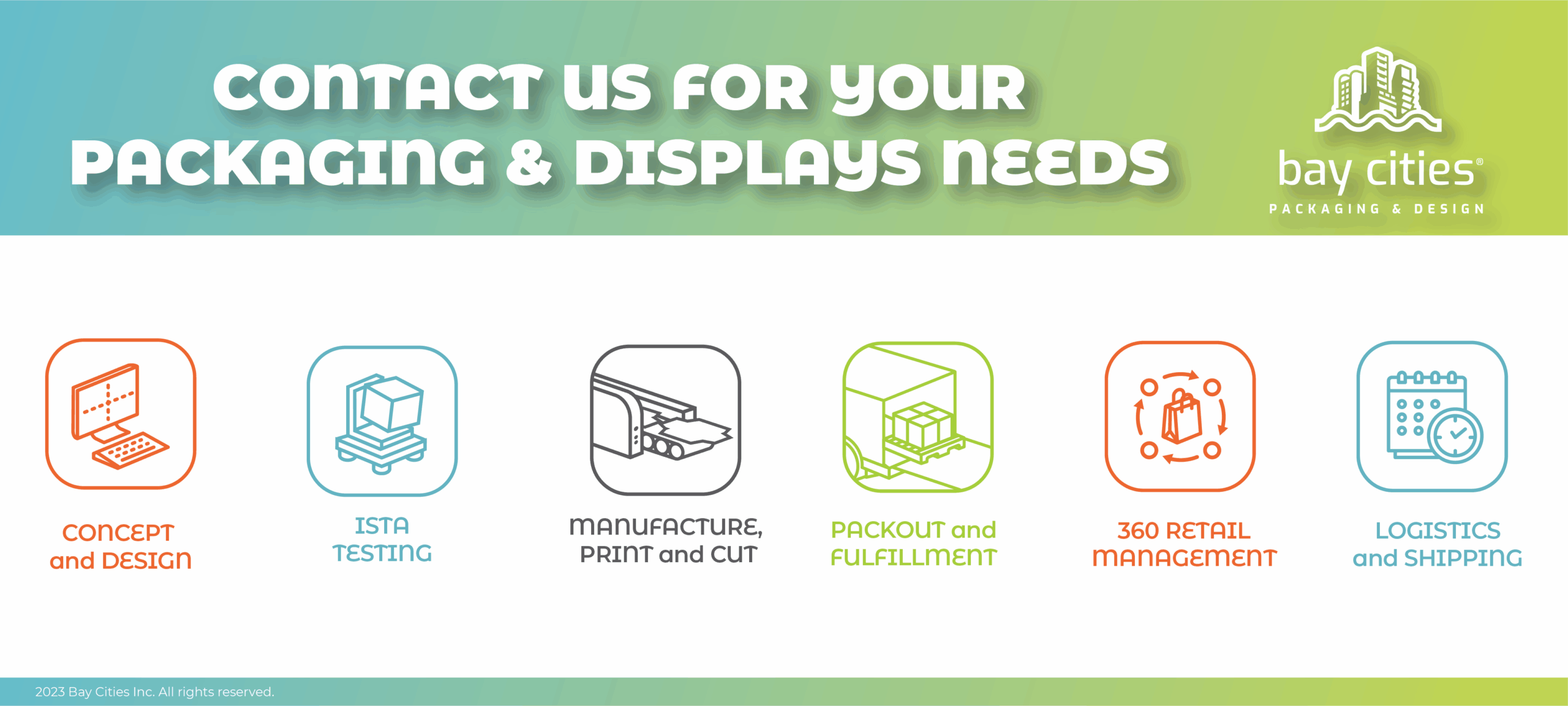
Whether you’re looking for the right material for POP displays or have the goal of embracing sustainable product packaging, Bay Cities Packaging and Design can help. Not only do we offer a comprehensive line of packaging and display products backed by rigorous ISTA testing, but we also offer related services, including concept and design, logistics and packout, retail display campaign programs, and more.
Have a question about the different types of linerboard? Ready to start your packaging or display project with Bay Cities Packaging and Design? Contact us today.
{{cta(‘1e158a54-8c43-48a5-91a3-f4f514c9a036’)}}