High-impact leadership requires stepping away from universal training modules and addressing real workplace friction with transparency. HR leaders fill this role, but have to avoid burning themselves out in the process. In this Q&A, Stephanie Navasu, SVP of HR at Bay Cities, shares how she achieves that balance.
By Gillian Manning
Given your decades of leadership experience, how have the expectations placed on new managers shifted, and how must leadership development programs evolve to meet those changes?
Twenty-plus years across IT, engineering, and manufacturing will show you a lot of change, and the expectations on new managers are no exception. From my experience and time in three different industries, leadership used to be heavily focused on operational execution, authority, and results, essentially, “get the job done because I said so.” Today, employees expect leaders to provide context, purpose, coaching, and emotional awareness. Leadership is now much more people-centered while still driving accountability.
One of the biggest shifts I’ve observed is the increased expectations around emotional intelligence. Employees today want leaders who can communicate with empathy, actively listen, provide meaningful instant feedback, and understand how their leadership style impacts morale, engagement, and retention. Managers are expected to build trust and psychological safety, not just manage tasks. Employees perform better when they understand why their work matters and how their contributions impact the bigger picture. Leadership development programs now need to spend far more time teaching self-awareness, communication skills, conflict resolution, coaching and adaptability, not just operational management.
Another major shift has been navigating generational dynamics in the workforce. While we’ve always had multiple generations working side-by-side, with all different communication styles and expectations around feedback and views on work life balance, what’s different now is that the younger employees, in particular, tend to value transparency, development opportunities, collaboration, and purpose-driven leadership more than traditional top-down management that prior generations we’re (for some part) ok with. Managers today have to know how to flex their leadership style depending on the individual and create environments where different generations can work effectively together. Leadership training can no longer be a one size fits all; it has to include training around communication adaptability, inclusive leadership, and understanding employee motivators.
One thing that hasn’t changed though? New managers still need real support. The best leadership development programs meet people where they are. They focus on the human side of managing: how to have hard conversations, how to build trust, how to actually develop the people on your team. That’s where the growth happens.
When a newly promoted manager struggles with the people-management side of their role, what is your approach to coaching them through that transition?
My first approach is to normalize the challenge. Many organizations promote strong individual contributors into management roles without fully preparing them for the shift from “doing the work” to leading people–not mine though, we changed that a long time ago. Anyone who gets promoted into management gets put into my leadership training first along with a 30/60/90-day training plan on how to become a leader. The skills that make someone successful individually are often very different from the skills required to manage, motivate, coach, and hold others accountable.
I focus first on identifying where the struggle is happening. Some managers avoid difficult conversations because they want to be liked. Others overcompensate and become too directive or micromanage because they feel pressure to prove themselves. I try to understand whether the issue is confidence, communication, emotional intelligence, accountability, or simply lack of experience.
From there, my coaching approach is very practical and hands-on. I believe managers learn best through real situations, not just theory. I spend time walking through actual employee scenarios with them, how to give constructive feedback, how to address performance concerns early, how to lead difficult conversations, and how to balance empathy with accountability. A lot of new managers think leadership means having all the answers, but I teach them that effective leadership is often about listening, asking the right questions, creating clarity, and building trust.
I also focus heavily on self-awareness. Many new leaders don’t initially realize how much their tone, reactions, or inconsistency impact their team. Most importantly, I believe coaching new managers has to be ongoing. One conversation or one training session is not enough. The best development happens through continuous feedback, mentorship, follow-up discussions, and creating a safe environment where managers can ask questions, make mistakes, and continue growing into the role.
Burnout is a major issue for HR professionals right now. How do you use your story and your mission to reignite purpose in HR teams that feel exhausted or disconnected?
I always come back to where it started for me. In second grade, someone asked me what I wanted to be when I grew up. My answer was simply “I want to help people.” It didn’t fit neatly into a career category at the time, but it turned out to be the most accurate job description I’ve ever given myself.
I stumbled into HR through an internship, and what hooked me was watching a strong HR leader genuinely change people’s lives. That was it for me. I was sold.
So when I sit with HR professionals who are running on empty, I try to bring them back to that same question of “Why did you choose this work?” Because burnout has a way of burying the answer. You get so deep in the day-to-day grind that you lose sight of the actual human impact you’re having. But it’s still there. Every manager you develop, every hard conversation you help someone navigate, every employee who feels like someone actually sees them. That stuff matters, and it spreads further than you know.
For senior HR leaders reading HRO Today who might feel overwhelmed by the current climate, what grounding advice do you have for anchoring back to the “why” of human resources?
About 10 years ago, I had a mentor that told me that “self-care isn’t selfish, it’s responsible” and I’ve made that part of my practice ever since. So I have a few non-negotiables. I actually take a one-hour lunch every day. I focus on something outside of work during that time. I read a book, I do some meditation. I do something for me during that hour. I also practice Pilates and have recently acquired a sound bath certification to help regulate my nervous system, especially when work or the world feels really heavy on my shoulders. HR can be emotionally heavy work, so having outlets and non-negotiables that refill my energy instead of drain it is incredibly important to me.
What is your favorite way to spend your free time?
I love to read and I especially love to have “reading parties” with my daughters. We love to just “bed rot” with a good book. But, any spare time I have, I love spending it with my husband and children, binge watching a new show, learning something new or going to the beach.
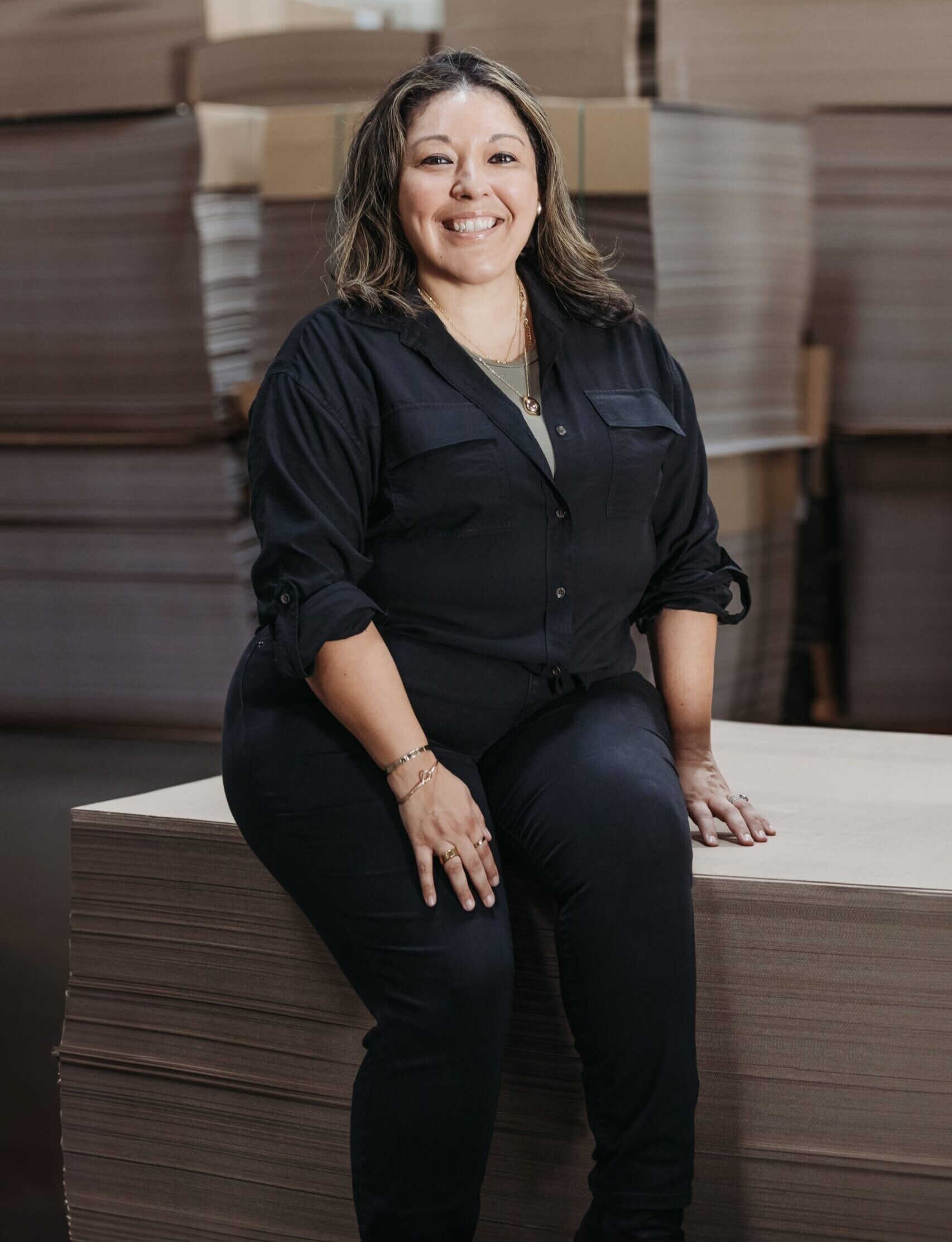
Stephanie Navasu is a seasoned HR executive with more than 21 years of progressive experience spanning IT, engineering, and corrugated manufacturing. She holds a B.A. in Political Science and an MBA with a focus on Leadership & Management, bringing both strategic insight and people-centered leadership to every role she has held.