by Sahar Mehrabzadeh, June 4, 2026
The competition for shopper attention has never been more expensive or more crowded. U.S. advertisers are projected to spend $69 billion on retail media this year, and that’s before accounting for trade spend, product development, and go-to-market investment. Meanwhile, more than 80 percent of consumers now rate store brands equal to or better than national brands in quality. The old playbook (build awareness, earn shelf placement, let brand equity do the rest) is no longer sufficient. Brands are spending more to win less, and the pressure is compounding.
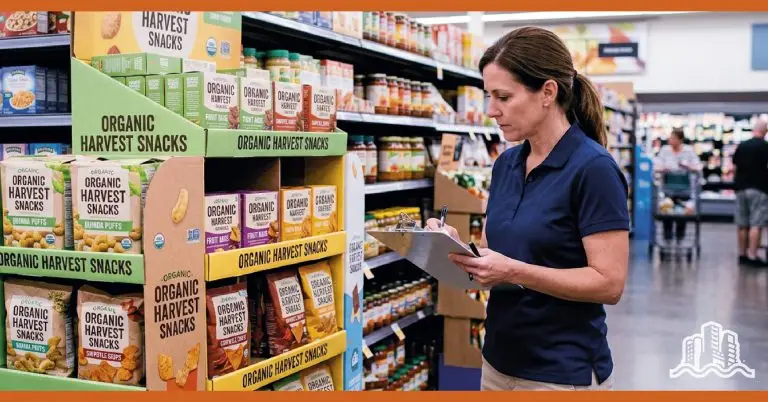
What rarely comes up in that conversation is what happens at the exact moment all that investment is supposed to pay off: when a shopper is standing in front of the shelf, deciding what goes in their cart. That’s where packaging and point-of-purchase displays either validates every dollar spent upstream or quietly lets it slip away. After two decades working with CPG brands and major retailers, the pattern holds across categories, price points, and retail formats. Packaging gets treated as a downstream execution detail, something to finalize once the real decisions have been made. That’s a structural mistake, and it’s leaving money on the shelf.
What’s actually happening at shelf
Think about what a shopper is working with in that moment. There’s no media placement reinforcing your brand story. No salesperson walking them through the benefits. Just a wall of competing options and the reality that most shoppers glance at a product for less than three seconds. Packaging is the only thing doing the selling, and it has to stop the shopper, communicate a clear value proposition, and guide a decision before they move on. Most packaging isn’t designed for that reality. It’s designed for brand presentations, line reviews, and internal approvals. Those are controlled environments that look nothing like a crowded shelf under inconsistent lighting after a messy reset. The gap between how packaging looks on paper and how it actually performs in stores is where conversion breaks down.
The deeper issue is structural. Marketing typically owns packaging design and messaging, while sales owns sell-through. That split means the people making design decisions often aren’t the ones accountable for how those decisions perform at retail. Packaging gets managed as a cost to control rather than a lever to pull. But the question brands should be asking isn’t “what does this cost to produce?” It’s “what is this converting at retail?”
Not all retail environments are created equal
One of the most persistent and costly mistakes brands make is treating every retail environment as interchangeable. A value-driven mass retailer operates on a completely different set of shopper expectations than a brand-forward specialty chain or a warehouse club. What works in one environment (the size, the messaging hierarchy, even the display format) can actively underperform in another.
The brands navigating this well have moved away from a single packaging or display execution and toward flexible systems. They’ve built a core architecture that maintains brand consistency while adapting to the specific demands of each retail partner. More importantly, they go beyond retailer compliance guidelines and design for how products are actually stocked, displayed, and shopped on the floor. That’s the operational fluency that separates packaging that passes review from packaging that drives sell-through. Now let’s not forget about the display; it’s the merchandising vehicle that showcases the product with a call to action that engages the shopper to stop and make a purchase.
Omnichannel has changed the job description
Packaging’s role has also expanded significantly as the line between physical and digital retail continues to blur. A package is no longer just a shelf asset. It’s a shipping vessel, an unboxing experience, and increasingly, a piece of shareable content. It has to survive the rigors of ecommerce while delivering a brand experience strong enough to earn a place on a customer’s kitchen counter and in their social feed. Consumers are also doing more homework before they buy. They’re comparing products across multiple sites, reading reviews, and increasingly using AI to make purchase decisions. By the time they’re standing in front of your product, they’ve often already formed an opinion based on how it showed up online. That means the design choices that make packaging legible and compelling in-store now also have to translate to a thumbnail on a product detail page, a social share, or a search result.
Yet most brands still design retail and ecommerce packaging on separate tracks with separate teams and separate briefs. The ones leading in omnichannel have integrated these into a single design system: structurally sound for distribution, visually strong across every touchpoint, and built to perform whether a shopper is standing in an aisle or scrolling through their phone at midnight.
The most expensive mistake is a timing problem
The biggest opportunity for most brands isn’t a new material or a smarter design. It’s timing. Bringing packaging and display strategy in at the end of the process, once product decisions are locked and retailer commitments are made, means absorbing the consequences of choices that were never designed with retail execution in mind. Changes at that stage are expensive, slow, and disruptive to retailer relationships. It costs brands months of velocity and, in some cases, the buyer’s confidence in the launch altogether. You only have one first impression and when that’s lost, you have zero credibility.
Brands that consistently win treat packaging and retail displays as part of the strategic brief from day one, right alongside pricing, distribution, and go-to-market planning. Not because it’s a nice-to-have, but because when everything else is equal, packaging and displays are often the deciding factor. It stops shoppers, signals value, accelerates sell-through, and earns reorders. And in a market where national brands are losing ground to store brands quarter after quarter, no amount of upstream spend can recover what’s being lost in those few seconds at the shelf.
Packaging and displays aren’t just part of the product. They are the selling system at retail. If they’re not working, the brand isn’t either.
The author, Sahar Mehrabzadeh, is Chief Revenue Officer at Bay Cities.