
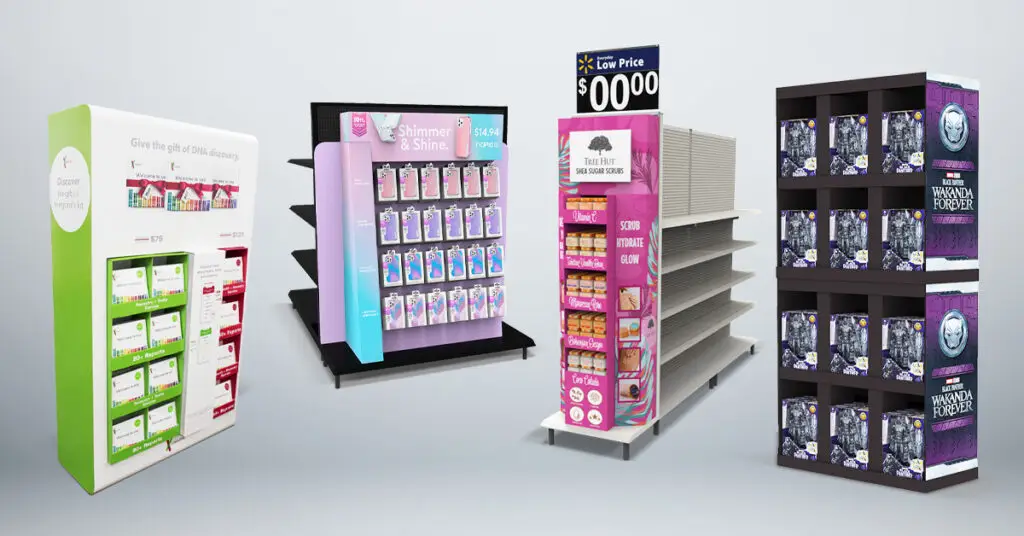
In-store retail marketing is an art and a science. It often comes down to one question: How do you get the right products in front of the right customers at the right time? While many marketing strategies can be deployed to answer this question, one tactic has been proven to be especially effective: endcap displays.
Read on for a complete guide to endcap displays, including what endcap displays are, their many benefits, and how to maximize their potential to increase visibility and boost sales.
What Is an Endcap Display?
There are many in-store point-of-purchase (POP) displays and possible placements for them, such as at checkout, in the middle of aisles, in the lobby, and at “dump bins” throughout the store.
Endcap displays refer to POP displays placed at the end of aisles. As shoppers travel through a store’s aisles, they encounter the products and services in highly conspicuous endcap displays. While they may or may not go down a particular aisle (and may or may not linger when they do), they inevitably encounter endcap displays. For any retailer, end caps create an important opportunity to influence product placement, build awareness, and encourage discovery in high-visibility store locations. A strong end-cap display can help shoppers notice featured products before they even enter the aisle, making it one of the most effective tools in brick-and-mortar stores.
Some examples of endcap displays include:
- A Super Bowl-themed endcap display featuring chips, salsa, and other snacks at the head of the chip and salty snacks aisle
- An endcap display featuring Easter-basket-friendly toys and treats at the head of the candy aisle in the weeks leading up to Easter
- An endcap display featuring warm weather skincare essentials at the head of the sunscreen aisle heading into summertime
- An endcap display of new products from a brand, such as new seasonal nail polish colors, at the head of the nail care aisle
These examples show the variety of ways end caps can support different category goals, from seasonal items and special event tie-ins to new product launches and cross-merchandising programs that bring related items together.

The Advantages of Using Endcap Displays
On the surface, endcap displays serve the same purpose and function as all types of displays: convince shoppers to purchase the products in the display. However, endcap displays are uniquely effective for capturing shoppers’ attention — and dollars.
In fact, after evaluating shopper traffic patterns and other data, researchers determined that end-of-the-aisle displays are linked with a 93% lift in exposure and a 32% increase in sales.
But that’s not all. Because research shows that 62% of grocery store purchases are impulse buys, endcap displays can also be a powerful driver for these unplanned purchases.
According to data from the National Retail Hardware Association, endcap displays can move products up to eight times faster than the same display in a different store location. Shoppers browsing the aisles will undoubtedly pass by endcap displays, and a strategically designed endcap can grab more shoppers’ attention.
In addition to being visually enticing, endcap displays also help sell products in other ways, including:
- Making it convenient for shoppers to find your products
- Showcasing your brand personality
- Creating new ways for shoppers to engage with your products toward a more satisfying customer experience
The best endcap displays also entice customers to travel down aisles they might otherwise skip by giving them a tantalizing sneak peek of what they’ll find.
For a retailer, one of the biggest benefits of end caps is how easy they make it to highlight a promotion, communicate a special price, and provide a more eye-catching merchandising solution without overhauling the full shelf set. The right end cap display can also build appeal around a featured item, offer a convenient shopping shortcut, and drive sales by helping the consumer locate products faster.

Best Products for Endcap Displays by Category and Merchandising Goal
While there’s no denying the potential of endcap displays based on these figures, harnessing their full capabilities depends on choosing the right products to display. Here are some proven ideas for products to feature in your endcap displays:
- Newly launched products
- Perishable products that will expire soon
- Groupings of themed or related items
- Products grouped by color to create visual interest
- Seasonal and holiday themes
The best end caps usually align with a clear merchandising objective. In some cases, that means using an end-cap display to seek attention for a new launch. In others, it may mean grouping multiple items together by category, using cross-merchandising to encourage larger basket sizes, or creating a special option around an event, holiday, or limited-time offer.
End Cap Display Design Best Practices
A strong end cap display should do three things quickly: stop traffic, communicate the offer, and make the product easy to shop. In a busy retail environment, shoppers often make decisions in seconds, so the design has to work hard without becoming cluttered.
Start With a Clear Shopper Message
The best end caps do not try to say everything at once. They focus on one clear story, whether that is a seasonal item, a featured promotion, or a new product launch. A clean message helps shoppers understand the offer at a glance and makes the display easier to engage with as they move through the aisle.
That message should also connect to the product selection. If the end cap display is built around a holiday, event, or themed occasion, every part of the display should reinforce that idea. When the story is clear, the display feels more intentional and gives shoppers a stronger reason to stop.
Make the End Cap Display Easy to Shop
An end cap display needs to look good, but it also needs to work in real retail conditions. That process starts with our packaging design services. Products should be easy to see, easy to reach, and easy to replenish. If shoppers cannot quickly understand where to look or how to grab the product, even a visually strong display can underperform.
Ease of shopping also comes down to layout discipline. Avoid overloading the unit with too many SKUs or too much copy. A cleaner presentation usually makes it easier for shoppers to find what they want and gives the retailer a simpler setup to maintain throughout the program.
Design for Fast Recognition
Because shoppers often notice end caps while moving past the aisle, the layout should support quick recognition. That means clean structure, visible product blocks, and graphics that reinforce the main offer without clutter. A well-designed end-cap display makes the product, the promotion, and the brand easy to understand within seconds.
This is also where hierarchy matters. The product should lead, the message should support it, and any pricing or promotional callouts should be easy to spot without overwhelming the display. The strongest end caps feel immediate, not busy.
Start With a Clear Shopper Message
The best end caps do not try to say everything at once. They focus on one clear story, whether that is a seasonal item, a featured promotion, or a new product launch. A clean message helps shoppers understand the offer at a glance and makes the display easier to engage with as they move through the aisle.
That message should also connect to the product selection. If the end cap display is built around a holiday, event, or themed occasion, every part of the display should reinforce that idea. When the story is clear, the display feels more intentional and gives shoppers a stronger reason to stop.
Make the End Cap Display Easy to Shop
An end cap display needs to look good, but it also needs to work in real retail conditions. Products should be easy to see, easy to reach, and easy to replenish. If shoppers cannot quickly understand where to look or how to grab the product, even a visually strong display can underperform.
Ease of shopping also comes down to layout discipline. Avoid overloading the unit with too many SKUs or too much copy. A cleaner presentation usually makes it easier for shoppers to find what they want and gives the retailer a simpler setup to maintain throughout the program.
Design for Fast Recognition
Because shoppers often notice end caps while moving past the aisle, the layout should support quick recognition. That means clean structure, visible product blocks, and graphics that reinforce the main offer without clutter. A well-designed end-cap display makes the product, the promotion, and the brand easy to understand within seconds.
This is also where hierarchy matters. The product should lead, the message should support it, and any pricing or promotional callouts should be easy to spot without overwhelming the display. The strongest end caps feel immediate, not busy.
End Caps for Pricing, Promotion, and Cross-Merchandising
End caps work best when the merchandising strategy is as strong as the structure. A good display may capture attention, but the pricing and product mix are often what turn that attention into action.
Keep Pricing Easy to Read
End caps often win on speed, so pricing should be simple and obvious. Tactics like single-price callouts or multiple-unit offers can help shoppers understand value quickly and reduce hesitation. Clear pricing also helps the display communicate its purpose without relying on extra explanation.
This is especially important for promotional programs. If the shopper has to search for the price or decode the offer, the display loses momentum. End caps tend to perform best when the value proposition is visible right away.
Build Promotions Around a Clear Occasion
End caps are especially effective when they connect to a specific retail moment. Seasonal events, limited-time offers, and themed bundles can all make the display feel more relevant and more timely. This is one reason end caps are often used for high-priority programs that need faster shopper recognition.
A clear promotional occasion also helps the retailer and brand stay aligned. Whether the program is tied to a holiday, a seasonal reset, or a category push, the display should make that connection immediately clear to the shopper.
Use Cross-Merchandising to Increase Basket Size
Pairing related items together can help the end cap display sell more than one product at a time. That might mean building meal solutions, bundling accessories with a core item, or grouping complementary products around an event. When done well, cross-merchandising gives the display a stronger reason to exist and adds more value for both the shopper and the retailer.
The key is to keep the pairing logical. Products should feel connected enough that the shopper understands why they are together. A thoughtful bundle can increase basket size, but a random assortment can make the display feel less focused.
End Cap Display Layout Ideas: Vertical vs. Horizontal
Layout has a major impact on how shoppers read and shop an end-cap display. Both vertical and horizontal arrangements can work, but they support different merchandising goals and different product stories.
When Vertical Layout Ideas Work Best
Vertical layouts are often useful when the goal is to guide the shopper’s eye from top signage down to the products. This can create a cleaner story flow and help the display use height effectively. It is also a strong option when the assortment is narrow, and the brand wants a more focused presentation.
A vertical approach can work especially well for hero products, single-brand presentations, or displays where the top message plays a major role in drawing shoppers in. It creates a clear path from awareness to product interaction.
When Horizontal Layout Ideas Make More Sense
Horizontal layouts can work better when the goal is to show a broader assortment or make comparisons easier across a row of products. They can also help create a more open, approachable display when the assortment includes multiple flavors, sizes, or variants.
This format is often useful when product variety is part of the selling story. It lets shoppers scan options more naturally from side to side and may make the display feel more shoppable when multiple choices are involved.
Choose the Right Idea Based on the Product Story
The right layout depends on what the display needs to communicate. A simple, hero-product message may benefit from a more vertical approach, while a wider assortment or cross-merchandised set may work better horizontally. The structure should follow the merchandising objective, not the other way around.
In many cases, layout decisions should also reflect the retailer environment. Available shelf width, traffic flow, and how shoppers typically approach the aisle can all influence which format feels more natural and performs better in-store.
End Cap Display Options: PDQ Trays, Drop-Ins, and Shelf-Based Designs
Not all end-cap display programs are built the same way. Some need speed and simplicity, while others need a higher level of brand control and structural customization. Understanding the main format options can make it easier to choose the right solution for the retailer, the category, and the display objective.
Shelf-Based Endcap Options
Shelf-based endcaps use the retailer’s existing shelf structure and add branded messaging, product organization, or smaller support elements. This can be a practical option when the brand wants flexibility and strong visibility without replacing the full fixture.
This format often works well for programs that need to fit within existing store infrastructure or align with retailer requirements. It can also be a strong choice when the brand wants to refresh the presentation without introducing a more complex display build.
PDQ Tray Options
PDQ trays are designed for speed. They are prepacked, branded units that can be opened and placed quickly with little extra assembly. This makes them a strong fit for faster rollouts, simpler replenishment, and programs where retail readiness matters.
They can be especially useful when stores need a format that is easy to set up and maintain. For brands, PDQ trays offer a more controlled presentation than loose stocking while still supporting efficient execution on the retail floor.
Drop-In Design Options
A drop-in end-cap display replaces the standard retailer shelf setup with a more fully branded unit. This gives the brand greater control over structure, graphics, and shopper experience, which can be valuable for larger launches or higher-priority merchandising programs.
Because drop-ins create a stronger branded presence, they can be a good fit when the end cap itself needs to feel like a destination. They may require more planning than shelf-based options, but they also offer more opportunity to shape how the shopper sees and experiences the display.
FAQs
What makes an effective endcap display?
An effective endcap display combines clear messaging, strong visibility, and easy product access. It should help shoppers understand the offer quickly and make the product simple to shop and replenish.
What products work best on endcap displays?
Endcaps are often used for featured promotions, seasonal items, new product launches, and complementary product bundles. The best products are the ones that benefit from higher visibility and fast shopper recognition.
What is a PDQ tray in retail?
A PDQ tray is a pre-packed display unit designed for fast placement in store. It usually arrives ready to open and merchandize, which helps reduce setup time and supports retail-ready execution.
How do endcap displays increase sales?
Endcaps increase sales by placing products in high-visibility locations, supporting impulse purchases, and making promotions easier for shoppers to notice and understand.
Endcap Display Tips & Tricks and Best Practices
So: what makes a good retail display? Here are tips and tricks for making the most of an endcap display:
- Include an interactive component to promote engagement, like a QR code
- Incorporate built-in lighting, such as backlit panels
- Frequently changing up endcap displays to keep them exciting
- Use a rounded, multi-level, or other creative design to extend into the aisle without obstructing it
- Be mindful of signage across everything from branding to visibility of key information
- Embrace creative retail display ideas to stand out in a crowded marketplace
A few end-cap display best practices can make a real difference. First, make sure the message is easy to understand at a glance. Second, confirm the unit fits the available space and follows any retailer rules or placement requirements. Third, use signage and product placement to communicate value, price, and purpose clearly. When executed well, end caps can provide a flexible solution for various campaigns while maintaining a strong visual profile.
It is also smart to study shopper behavior and seek patterns in how consumers move through the store. That kind of insight can help a company choose the right size, build the right end-cap display design, and decide whether a fun, themed concept or a more straightforward merchandising approach will have higher appeal.
At Bay Cities Packaging & Design, we have extensive experience with POP displays. That experience spans everything from end caps to fully custom retail displays built for any category. Whether you already know exactly what you’re looking for in an endcap or other POP display, or you’re just starting to think about ways to amplify your retail marketing efforts, we can help.
From concept through production, Bay Cities can help retailers and brands develop end caps that are easy to shop, easy to notice, and built for real retail conditions. Whether your goal is awareness, promotion, product placement, or a more eye-catching in-store solution, our team can help create end cap display ideas that support your category strategy and shopper experience.
For more tips on creating effective displays that get results, download our free ebook, How to Be Successful in Retail with a POP Display.
{{cta(’70f53092-23d6-48fd-af3e-8365e84a9d79′)}}