
Seasonal retail campaigns can create valuable opportunities for CPG brands to capture shopper attention, support new products, and drive sales during high-priority retail windows. But getting a campaign onto the retail floor requires much more than a strong creative concept.
Retail campaign planning connects the campaign objective to the realities of in-store execution: retailer requirements, display and packaging design, approvals, production, packout, logistics, and delivery. When those pieces are considered early, brands can build programs that not only look compelling but are also designed to arrive at retail ready for execution.
For CPG brand managers, shopper marketing teams, retail sales teams, agencies, and retail program managers, a successful seasonal program starts with a clear plan.
What Retail Campaign Planning Means for In-Store Programs
Retail campaign planning is the process of coordinating everything required to bring a seasonal or promotional program from an initial objective to the retail floor.
Unlike a broader marketing strategy, retail campaign planning focuses specifically on execution. It establishes the campaign goal and retailer timeline, identifies display or packaging needs, maps required approvals, and works backward through production and delivery deadlines.
A solid plan answers practical questions early: What does the campaign need to accomplish? When does it need to be in stores? What does the retailer require? What needs to be designed and produced? Who needs to approve it? And when does finished product need to ship?
Answering those questions at the beginning helps teams identify dependencies before they become last-minute problems.
Start With the Campaign Goal and Retail Window
Before deciding what a seasonal retail display should look like, define what the campaign is expected to accomplish and when it needs to happen.
A program might support a new product launch, a seasonal promotion, a regional initiative, a holiday or event-based campaign, or a retailer-specific sales window. Each scenario creates different considerations for messaging, quantities, display formats, approvals, production, and distribution.
A national holiday campaign, for example, may require large quantities and coordination across multiple distribution points. A regional promotion could require fewer displays but different product mixes or creative versions. A retailer-specific launch may have its own requirements and a tightly defined window for product to arrive at distribution centers or stores.
Timing matters because every milestone affects the next one. If a display must be in stores by a specific date, teams need to work backward from that date to account for retailer approvals, structural and graphic design, prototyping or testing when required, manufacturing, product availability, packout, transportation, and delivery appointments.
Seasonality can also influence how and why shoppers engage with products. For an example of planning around a specific seasonal opportunity, see Bay Cities’ 5 Tips for Brands Marketing in Retail During Cold and Flu Season.
Match the Campaign to the Right Retail Environment
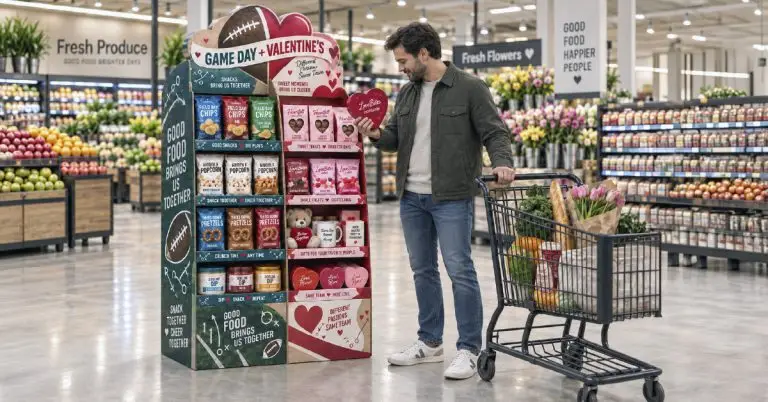
An effective retail promotional display is not developed in isolation. It needs to work within the store environment where shoppers will encounter it.
Placement affects everything from footprint and messaging hierarchy to product capacity and shopper interaction. A display positioned in a high-traffic promotional area has different requirements than one designed for an aisle, endcap, pallet position, or other designated retail location.
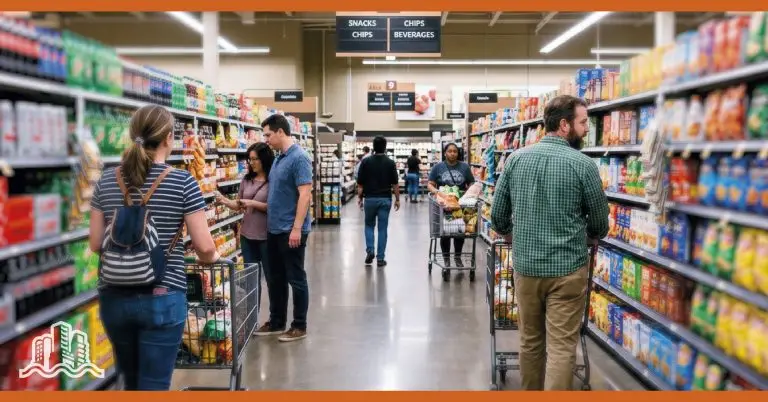
Retail environments are also evolving as retailers respond to changing shopper expectations and merchandising priorities. Understanding those shifts can help brands plan programs around the realities of today’s store. Explore more in The Future of Grocery Retail: Trends Shaping Shopper Behavior, Merchandising, and Growth.
What Brands Should Confirm Early
Before creative and structural development move too far, confirm:
- Retailer or channel: Where will the program run?
- Store format: Are there different formats or store footprints to accommodate?
- Campaign location in-store: Where is the display expected to be placed?
- National vs. regional rollout: How many markets and stores are involved?
- Product quantity: How much inventory needs to be incorporated into the program?
- Display or packaging format: What format is appropriate for the product, placement, and retailer?
- Setup expectations: Will the display arrive assembled, partially assembled, packed with product, or require store-level setup?
These decisions help define the actual execution requirements rather than allowing a campaign concept to develop around assumptions.
For additional insight into the role displays can play within the grocery environment, read Harnessing the Power of Retail Displays in Grocery Stores.
Review Retailer Requirements Before Design Starts
Retailer requirements should be treated as design inputs, not as a final compliance check.
Depending on the retailer and program, specifications may define the display footprint, height limits, colors or branding conventions, allowable materials, signage requirements, submission deadlines, and approval processes. Missing one of those requirements can mean redesigning a structure or revising artwork after time has already been invested.
This is where working with a partner that understands retail execution can make a difference. Bay Cities has decades of experience working with major retailers and deep knowledge of in-store display requirements. Its teams design to retailer specifications and style guides, and Bay Cities has also been tasked with helping create store style guides.
The goal is straightforward: incorporate retailer requirements into the program from the beginning so that creative ideas are developed within realistic execution parameters.
Brands should identify early:
- Display footprint requirements
- Maximum or minimum height requirements
- Color and brand guidelines
- Material restrictions
- Signage specifications
- Submission deadlines
- Required prototypes, renderings, or samples
- Retailer-specific approval steps
This creates a more efficient path from concept to approval and ultimately to the retail floor.
Align Creative, Structure, and Production Feasibility
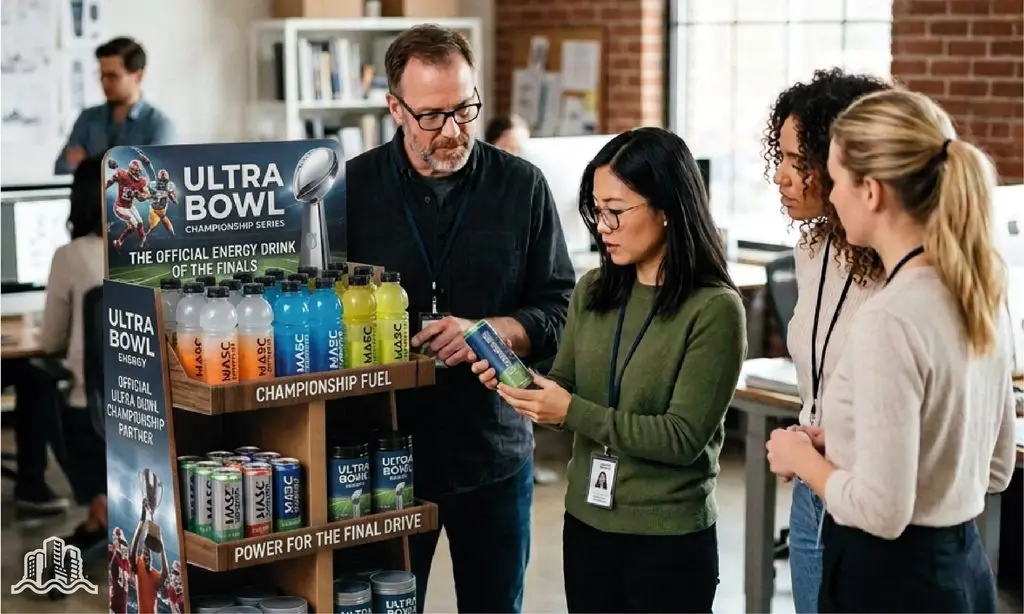
A seasonal campaign has to accomplish several things at once. It needs to communicate the brand message, attract shoppers, hold and present product effectively, comply with retailer requirements, survive transportation and handling, and be practical to manufacture and assemble.
That makes collaboration between creative, structural, and production teams especially important.
A graphic concept may look excellent on-screen but lose impact once applied to a physical display. Likewise, an ambitious structural idea may create manufacturing, assembly, shipping, or timing challenges that are difficult to solve late in the process.
Bringing those disciplines together early can reveal potential issues while there is still time to address them.
Key Planning Checks
Brand message and seasonal theme: Is the campaign idea immediately recognizable and consistent with the broader brand?
Shopper readability: Can shoppers quickly understand the message from the expected viewing distance?
Product visibility: Does the structure make the product easy to see and shop?
Display stability: Is the display designed to remain structurally sound through its intended use?
Structural fit: Does the product fit properly, and does the structure comply with the intended retail space?
Assembly needs: Is setup realistic for the people responsible for assembling or placing the display?
Print and color accuracy: Can the selected printing process deliver the required graphics and brand consistency?
Production timeline: Can the approved concept be manufactured in the quantity needed within the campaign schedule?
Bay Cities brings structural designers, graphic designers, and visual merchandisers together with manufacturing expertise. Realistic 3D rendering can also help stakeholders evaluate a program and support retailer presentations before full production begins.
When appropriate, testing should also be considered before launch. Bay Cities operates in-house ISTA-certified testing labs that can evaluate packaging and displays against conditions such as vibration, drops, impacts, and compression.
A display is not finished simply because manufacturing is complete.
For seasonal retail campaigns, the handoff between manufacturing, product, packout, transportation, and retailer delivery can be one of the most important parts of the program.
Start by confirming product availability. If the campaign requires displays to be packed with merchandise before shipment, product must arrive at the packout location in the right quantities and at the right time.
Teams should also document exactly how the program will be packed. That includes packout instructions, product configurations, the number of displays or kits, labeling requirements, and any retailer-specific shipping or distribution requirements.
Then map the path to retail.
Does the program ship through a retailer distribution center? Are delivery appointments required? Are there specific routing requirements? How much transit time is needed? How close is the arrival date to the campaign launch?
These details matter because a display arriving after the promotional window begins can reduce the value of the entire campaign.
Bay Cities provides end-to-end project support spanning design, manufacturing and print, packout and assembly, and supply chain logistics. That connected approach can help teams maintain visibility from concept through final delivery rather than managing each stage as an isolated handoff.
Retail Campaign Planning Checklist
Use this checklist before moving a seasonal or promotional in-store program into execution:
- Campaign goal confirmed: The team agrees on what the program needs to accomplish.
- Retail window identified: Launch, promotion, and required arrival dates are documented.
- Retailer requirements reviewed: Relevant display, material, signage, submission, and approval requirements are understood.
- Display location confirmed: The intended in-store environment and placement are known.
- Creative direction approved: Brand messaging and seasonal creative have stakeholder alignment.
- Structure and materials validated: The design works for the product, retailer environment, manufacturing process, and transportation needs.
- Product quantities confirmed: Inventory requirements match the planned number and configuration of displays or kits.
- Packout needs documented: Assembly, product loading, labeling, and kitting requirements are clear.
- Production timeline approved: Manufacturing milestones align with the campaign launch.
- Shipping plan reviewed: Routing, distribution centers, carriers, and other logistics requirements have been considered.
- Store delivery timing confirmed: Required appointments and arrival dates support the retail window.
- Final approvals assigned: Everyone knows who is responsible for retailer, brand, creative, structural, production, and final execution approvals.
The earlier these items are confirmed, the easier it becomes to spot schedule conflicts and dependencies before they threaten the launch.
Common Retail Campaign Planning Mistakes
Even a strong campaign idea can run into execution problems when planning begins too late or important details remain unresolved.
Starting too late: Seasonal programs have fixed retail windows. Compressing the schedule leaves less time for design iterations, approvals, testing, manufacturing, packout, and transportation.
Missing retailer requirements: Developing creative or structures before reviewing specifications can result in avoidable revisions.
Creating graphics that do not fit the display structure: Creative and structural design should work together. Important messaging can lose visibility when panels, product, folds, or other physical elements are not considered.
Leaving product quantities unclear: Display quantities, product counts, and packout configurations are interconnected. Uncertainty in one area can affect purchasing, production, assembly, and shipping.
Making late artwork changes: Changes near production can disrupt approvals, print schedules, and manufacturing timelines.
Failing to finalize packout details: Unclear assembly or product-loading instructions can create problems when components and inventory reach the fulfillment stage.
Creating the shipping plan too late: Transportation should be part of campaign planning rather than a final task after manufacturing. Distribution center requirements, delivery appointments, routing, and transit times can all affect the schedule.
Overlooking store setup needs: The final execution should be realistic for the retail environment. Complex setup can create additional work at store level and increase the risk that a program is not executed as intended.
Ultimately, strong retail campaign planning is about connecting the idea to every step required to put that idea in front of shoppers.
Bay Cities helps brands manage that connection through retail-focused concept and design, project management, testing, manufacturing and printing, packout and fulfillment, logistics, and retail program management. With these disciplines connected, CPG teams can approach seasonal campaigns with a clearer path from concept to retail.
FAQ
What Is Retail Campaign Planning?
Retail campaign planning is the process of coordinating the goals, retailer requirements, creative and structural development, approvals, production, packout, logistics, and delivery required to execute an in-store promotional program. For seasonal campaigns, the process typically works backward from a defined retail or launch window.
When Should CPG Brands Start Planning Seasonal Retail Displays?
Planning should begin early enough to accommodate retailer requirements and approvals, design development, product availability, manufacturing, packout, shipping, and any necessary testing. There is no single lead time that applies to every program because complexity, quantity, retailer requirements, display format, and distribution strategy can all affect the schedule. The safest approach is to establish the required in-store date first and build the project timeline backward from it.
What Are Retail Promotional Displays Used For?
Retail promotional displays are used to give products additional visibility and merchandising presence during launches, seasonal events, promotions, and other priority sales periods. Depending on the campaign, they can help organize products, communicate promotional messaging, create a branded destination, and make products easier for shoppers to discover.
Why Do Seasonal Retail Campaigns Get Delayed?
Delays often happen when key execution details are resolved too late. Common causes include missed retailer requirements, delayed approvals, late artwork changes, unclear product quantities, unresolved structural or material decisions, product availability issues, incomplete packout instructions, and shipping plans that do not leave enough time for retailer delivery requirements.
The best defense against these delays is an integrated plan that connects the campaign objective to the retail window—and connects design, production, packout, and logistics long before the program is scheduled to reach stores.
Planning your next seasonal or promotional retail campaign? Contact Bay Cities to turn your vision into a retail-ready program. From concept and design through production, packout, logistics, and delivery, we help brands stand out, execute with confidence, and win at retail.